Complete Guide to Siding Installation for Dayton, OH Homeowners
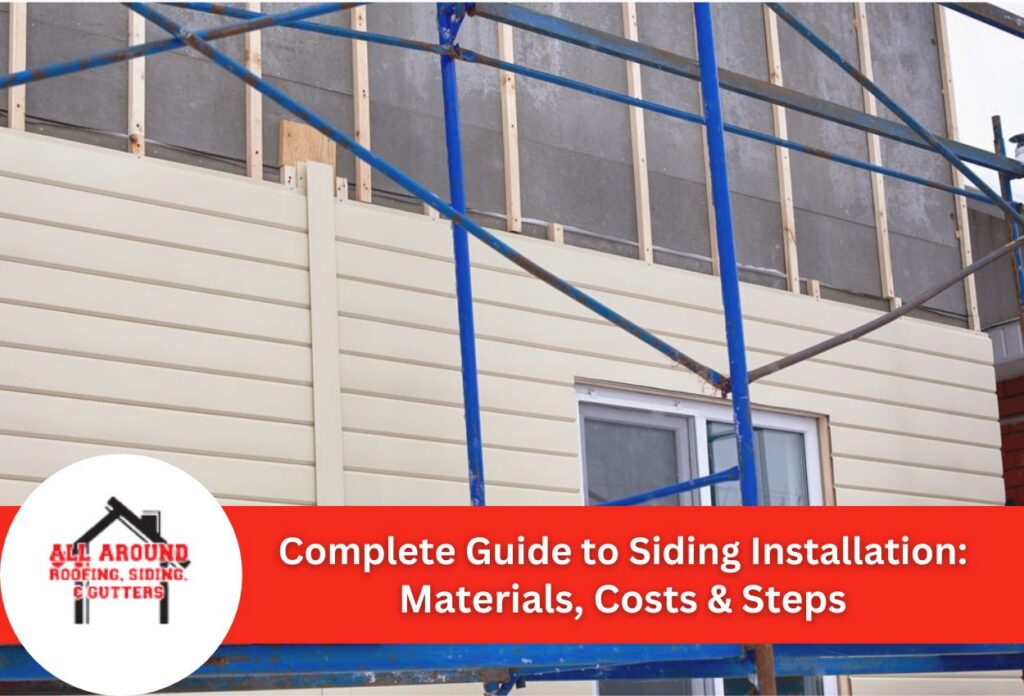
Siding installation is the process of attaching an outer layer of material to the exterior walls of a home, and it is one of the most important things a Dayton homeowner can do to protect the structure and improve curb appeal.
Dayton’s humid weather makes proper siding installation especially important. The area receives about 40 inches of precipitation per year, experiences sharp temperature changes between seasons, and faces intense summer UV exposure. Those conditions put real stress on exterior materials. Siding that is installed incorrectly, or made from the wrong material, can allow moisture buildup, warping, and structural damage over time.
Whether this is your first siding project or you are vetting contractors and comparing bids, this guide gives you the facts you need to make a confident decision. The sections ahead cover material options suited to Ohio’s weather, what the installation process looks like from start to finish, and what to expect when it comes to the final cost and how long the job typically takes.
What Are the Best Siding Materials for a Home Exterior in Ohio’s Climate?
Fiber cement and engineered wood are the top-performing siding materials for Dayton’s climate, but the right choice depends on your budget, your home’s exposure, and how long you want the material to last. Of all the decisions in a siding project, material selection has the biggest long-term impact on durability, maintenance costs, and protection against Ohio’s weather.
| Material | Avg. Cost Per Sq. Ft. (Installed) | Durability | Moisture Resistance | Insulation Value | Dayton Climate Suitability |
|---|---|---|---|---|---|
| Vinyl | $4 to $12 | Medium | High | Low to Medium | Medium |
| Fiber cement | $6 to $15 | High | High | Medium | High |
| Engineered wood | $4 to $15 | High | Medium to High | Medium to High | High |
| Metal | $7 to $14 | High | High | Low to Medium | Medium to High |
| Wood shake | $7 to $16 | Low to Medium | Low | Medium | Low |
Fiber cement and engineered wood are the most suitable options for Dayton homes because both hold up well against the humidity, ice dams along eaves, and intense UV exposure in summer that Dayton homeowners deal with every year. Wood shakes are rated poorly across the board for this region since moisture absorption and sharp temperature changes between seasons cause warping, cracking, and early deterioration that raise long-term maintenance costs. Metal siding is durable and moisture resistant, but its lower insulation value makes it a secondary choice for homes focused on energy efficiency.
Each material above has its own installation requirements, maintenance schedule, and lifespan range. Separate breakdowns of fiber cement siding, engineered wood, vinyl, and metal siding are available for homeowners who want a deeper look at any single option before making a final call.
What Tools and Materials Do You Need Before Starting a Siding Installation?
A successful siding installation requires two separate checklists: one for tools and one for materials. If you skip an item on the checklist, this will most likely slow down the job or lead to mistakes that cost more to fix than to prevent.
Tools Required
- Circular saw: Cuts siding panels cleanly to length and angle (a dull blade causes edge cracking, especially on fiber cement).
- Level: Keeps each course of siding flat and even on the wall (a single degree of tilt can build up across an entire wall run).
- Chalk line: By snapping this, you create a straight reference line across long walls (ensures courses stay level even when the foundation or framing is slightly off).
- Tin snips: Trim metal flashing, J-channel, and corner posts to fit around windows and doors (hand-cutting these with the wrong tool causes bent edges and poor fits).
- Nail gun or hammer: Drives nails at the correct depth; nails that are too shallow leave panels loose, while too deep crack the material or restrict natural expansion.
- Utility knife: Scores and trims vinyl siding panels without a saw (reduces the risk of over-cutting near trim pieces and window frames).
- Tape measure: Required for consistent installation. Most siding profiles use a 4-inch to 6-inch exposed face, and inconsistent measurements show up clearly on a finished wall.
- Safety equipment: Hard hat, safety glasses, and fall protection when working above 6 feet (OSHA guidelines apply to residential work at height).
Materials Required
- Starter strips: Anchor the first course of siding at the correct angle so every panel above it sits at a consistent pitch.
- J-channel: Frames all window and door openings, allowing panels to slide in cleanly without exposed cut edges.
- Corner posts: Finish inside and outside corners with a clean edge and prevent moisture from working behind the panels at wall transitions.
- House wrap or moisture barrier: Acts as the last line of defense against water intrusion behind the siding, and this is the single most important material on the list.
- Nails or fasteners rated for the chosen siding type: Fiber-cement siding requires stainless steel or hot-dipped galvanized nails. Using the wrong fasteners can lead to rust stains within 1 to 2 years.
- Exterior-rated caulk: Seals all openings, joints, and trim connections. It’s important to keep in mind that interior caulk fails quickly when exposed to temperature changes and UV exposure, so this may be something you have to maintain yearly.
Skipping or cutting corners on the house wrap and moisture barrier is one of the most common, expensive mistakes in DIY siding installation. With Dayton’s amount of yearly precipitation, a moisture barrier behind the siding is important in order to stop water from reaching the framing materials. Water damage that occurs for years behind siding can lead to thousands of dollars in damage before the visible signs of a problem even appear.
Before ordering materials or picking up tools, confirm the list of necessary tools matches the siding type you’ve chosen. Each material covered in this guide has specific fastener and accessory requirements that affect how well the finished installation holds up over time.
How Do You Install Siding on a House Step by Step?
Siding installation follows 9 steps in a specific, fixed order. Skipping or rushing any one of them can compromise the entire system. Each step builds on the one before it, so following the sequence of tasks matters as much as the materials and tools chosen.
- Inspect and prep the substrate. Check the sheathing for rot, soft spots, and nail pops before any new material goes on the wall. Any damaged sections need to be replaced at this stage. If bad sheathing is covered with new siding, this only puts off a more expensive repair later on.
- Install house wrap and a moisture barrier. Start at the bottom of the wall and work upward, overlapping each horizontal seam by at least 6 inches so water sheds down and away from the sheathing. Tape all seams and the areas around window and door openings, since an unsealed seam is an open path for the annual rainfall Dayton receives.
- Install corner posts and J-channel trim. Set corner posts evenly using a level before attaching them. A corner post that is even slightly off will throw every panel course out of alignment. Install J-channel flashing around all window and door openings so panels have a clean, sealed edge to slide into.
- Snap chalk lines for level courses. Measure up from the foundation and snap horizontal chalk lines across the entire wall at consistent intervals that match the siding’s reveal measurement. These lines act as guides for every course above and keep the finished wall visually level across long runs.
- Install the starter strip. Nail the starter strip along the bottom chalk line; this piece sets the pitch angle for the first course and every panel above it. A crooked or improperly angled starter strip will show up across the entire finished wall.
- Cut and install siding panels from bottom to top. Begin at the bottom and work upward, locking each panel into the one below it. Nail panels down along the center of nail slots, not at the edges, so each panel can shift slightly with temperature changes without buckling or cracking.
- Fit the siding around windows and doors. Measure and cut panels to slide into the J-channel on each side of every opening. Cut edges should sit inside the J-channel, not be exposed to weather, so moisture cannot wick into the panel end grain or material edge.
- Install trim and finishing pieces. Add any remaining corner trim, under-sill trim, and frieze board pieces at the top of the wall. These finishing pieces close off gaps where panels meet the roofline or soffit and give the wall a clean, finished appearance.
- Caulk and seal all penetrations and joints. Apply exterior-rated caulk to every spot where siding meets trim, around utility penetrations, and at any cut edge exposed to weather.
Pro Tip — Dayton Expansion Gaps: Dayton’s temperature range means panels installed too tightly during a warm summer day will buckle when heat causes the material to expand. Always follow the manufacturer’s recommended expansion gap between panels, typically listed in the installation guide for each product, and never force panels tight against trim pieces or adjacent panels at installation.
Following these steps in order protects the wall and building as a whole, not just the visible surface. If any step raises questions during a DIY project, or if the substrate inspection reveals damage, getting a professional assessment before continuing saves time and money compared to correcting mistakes after the job is done.
What Are the Most Important Siding Installation Tips for Beginners?
Siding installation is achievable for skilled DIYers, but small errors can build up fast, as a single misaligned course or missed expansion gap can lead to repair costs that exceed the original installation budget. The tips below reflect hard-earned practical knowledge that separates a lasting result from one that fails within a few seasons.
- Start with a level baseline: Snap a chalk line across the entire bottom of the wall before placing a single panel. Even a small slope in the starter strip will multiply course by course up the wall and become clearly visible on a finished surface.
- Nail above the slot, never through it: Drive fasteners at the center of the nail slot so each panel can shift slightly without cracking. Nailing through the siding face locks the panel in place and prevents the natural expansion and contraction that temperature changes demand.
- Overlap horizontal seams away from primary sight lines: Position seam overlaps so they face away from the main viewing angle, typically away from the street or main entry. Seams facing forward trap water and draw the eye to imperfect cuts.
- Keep siding a minimum of 6 inches above grade: Siding that sits closer than 6 inches to the soil or mulch wicks moisture directly into the panel and the wall behind it. You should also try to maintain at least 1 inch of clearance above any roofline to prevent the same moisture wicking problem where siding meets a lower roof surface.
- Use corrosion-resistant fasteners only: Hot-dipped galvanized or stainless steel nails are required for most siding types. Standard steel fasteners rust within 1 to 2 years in Dayton’s humidity, leaving stains that bleed through paint and compromise the hold.
- Check that the siding is flat and level every 3 to 4 courses: Do not wait until the wall is half-finished to verify alignment. Catching a drift early after every 3 or 4 courses means a small correction rather than pulling a large section of installed panels.
- Seal around all penetrations immediately: Apply exterior-rated caulk around every utility line, hose bib, outlet, and light fixture as each panel goes up; not as a final step. Leaving gaps like that open while completing nearby panels allows moisture to work behind the wall before the job is even done.
- Follow manufacturer expansion gap specs exactly: Every siding product lists a required gap between panels and trim pieces. Panels installed too tightly on a cool day will buckle when summer heat causes the material to expand, which is a mistake that requires removing and reinstalling entire sections to fix.
- Test the substrate before covering it: Press a screwdriver into the sheathing at multiple points around windows, doors, and along the base of the wall. Any spot that gives way represents rot that must be replaced before new siding goes over it.
For Dayton specifically, tips 4 and 8 carry the most weight. Local humidity during warmer months and temperature changes between winter and summer make moisture wicking prevention and proper expansion gaps the two areas where DIY installations most commonly fail.
How Long Does Siding Installation Take From Start to Finish?
A typical single-family home in Dayton takes 3 to 10 days for a professional crew and 2 to 4 weeks for a DIY approach, depending on the size of the home, the material chosen, and crew size. Fiber-cement siding adds time at both ends of that range since the cutting process requires more precision, and the material’s weight slows handling compared to vinyl.
The table below breaks down estimated timelines by home size and installation type.
| Home Size | Professional Crew | DIY | Notes |
|---|---|---|---|
| Under 1,500 sq. ft. | 3 to 5 days | 2 to 3 weeks | Vinyl is installed quickly; fiber cement adds 1 to 2 days for a pro crew |
| 1,500 to 2,500 sq. ft. | 5 to 7 days | 2 to 4 weeks | Cutting Fiber cement and its weight adds noticeable time for DIYers |
| Over 2,500 sq. ft. | 7 to 10 days | 3 to 4 weeks or longer | Complex trim work, multiple stories, or utilizing fiber cement extends both timelines |
Several variables can make any of these timelines longer in Dayton, specifically. Delays caused by rain, or temperatures that are below freezing or higher than 80 degrees, will add time to the final schedule. Optimal installation windows are the most common reasons jobs run past the original schedule, and Dayton’s winters can keep temperatures below that range for weeks at a time. If the initial inspection from step one uncovers rot, repairs must happen before any siding goes on, adding anywhere from one day to several days, depending on how much siding needs replacing. Some local jurisdictions also require a permit for full siding replacement, and permit processing time varies. Confirming permit requirements with your contractor before work begins keeps the overall timeline on track.
What Is the True Cost to Install Siding on a House in Dayton, OH?
The cost to install siding on a house in the Dayton, OH area typically ranges from $5,000 to more than $20,000, for a full replacement, with the final number driven by material choice, home size, and site conditions. The table below shows realistic 2024 regional cost estimates across the five most common siding materials for Dayton homeowners.
| Siding Material | Material Cost Per Sq. Ft. | Labor Cost Per Sq. Ft. | Est. Total — 1,500 Sq. Ft. Home | Est. Total — 2,500 Sq. Ft. Home |
|---|---|---|---|---|
| Vinyl | $1.50 to $4.00 | $1.50 to $3.00 | $4,500 to $10,500 | $7,500 to $17,500 |
| Fiber cement | $2.00 to $5.00 | $3.00 to $5.00 | $7,500 to $15,000 | $12,500 to $25,000 |
| Engineered wood | $2.00 to $4.50 | $2.00 to $4.00 | $6,000 to $12,750 | $10,000 to $21,250 |
| Metal | $3.00 to $7.00 | $3.00 to $5.00 | $9,000 to $18,000 | $15,000 to $30,000 |
| Wood shake | $4.00 to $8.00 | $4.00 to $6.00 | $12,000 to $21,000 | $20,000 to $35,000 |
These figures cover materials and labor only. Several costs catch homeowners off guard after a quote arrives. Old siding removal and disposal typically adds $1.00 to $2.00 per square foot to the total. If the substrate inspection uncovers rot or damaged sheathing, board replacement can run $2.00 to $5.00 per square foot, depending on how much area is affected. Dayton-area permit fees for a full siding replacement vary by jurisdiction but commonly range from $100 to $500. Trim boards, J-channel, corner posts, and accessory pieces add another $500 to $2,000+, depending on how much linear footage the home requires.
Fiber cement carries a labor premium worth understanding before comparing quotes. The material weighs more than vinyl and requires scored cuts or a fiber-cement shear rather than a standard utility knife. That added cutting time and physical handling effort pushes labor costs $1.00 to $2.00 per square foot higher than vinyl on most jobs, which is a difference that adds $1,500 to $5,000 on a mid-size home before a single panel goes up.
Getting 3 itemized quotes from licensed Dayton contractors is the most reliable way to establish an accurate, project-specific budget — and itemized breakdowns make it easy to see exactly where cost differences between bids are coming from. All Around Roofing, Siding & Gutters provides free estimates for Dayton-area homeowners ready to get that process started.
When Is the Best Time of Year to Install Siding in Dayton, Ohio?
Spring (April to May) and fall (September to October) are the best times to install siding in Dayton, because temperatures during the day consistently fall within the 30 to 70 degree window that allows sealants to cure properly and materials to be handled without risk of damage. Dayton’s four distinct seasons create real installation challenges at both temperature extremes, and understanding those challenges helps homeowners plan smarter.
Why Temperature Extremes Cause Problems
Below 40 degrees, sealants and caulks struggle to cure correctly, and vinyl panels become brittle, leading them to crack during handling, a real risk. If temperatures reach above 85 to 90 degrees, vinyl expands, and panels become harder to align accurately. Adhesive-backed products are especially affected by heat, since the adhesive can soften before it bonds correctly. Dayton winters regularly keep temperatures below 40 for weeks at a stretch, effectively shutting down the safe installation window from December through early March; so both seasons, while the lesser of the extremes, bring sad memories.
Summer and Wind Considerations
Summer installation is workable in Dayton as long as temperatures stay below 90 degrees and direct sun exposure on panels is managed throughout the day. July averages a high of 84 degrees, which sits right at the edge of the acceptable range, meaning summer jobs require closer attention to scheduling work during cooler morning hours. Wind conditions exceeding 20 to 25 mph pose both a safety risk and a quality risk during installation, and Dayton does see occasional high-wind events capable of hitting those speeds. Any job paused for wind delays can affect material alignment and sealant application if panels are partially installed when work stops.
A practical scheduling tip for Dayton homeowners: get contractor estimates in winter so installation can be booked for the spring window before the contractor’s peak season fills up. Spring slots move fast, and homeowners who wait until April to start calling often find the best crews are already booked weeks out.
Should Siding Installation Be A DIY Project or Should you hire a professional contractor?
Hiring a professional is strongly recommended for most Dayton siding projects, but a motivated homeowner with carpentry experience can successfully complete a vinyl siding job on a small, single-story structure. The right choice depends on the material, the home’s height, the substrate condition, and how well the installer understands moisture barriers and flashing details.
DIY May Be Possible If…
- The project is vinyl siding on a single-story structure. Vinyl is the most forgiving siding material for experienced DIYers, as it cuts with basic tools, weighs far less than fiber cement or engineered wood, and does not require specialized safety equipment on a one-story home.
- The homeowner has hands-on exterior carpentry experience. General home improvement skills are not enough. Working with siding panels requires understanding overlap, expansion gaps, and proper nailing patterns — mistakes in any of these areas show up quickly.
- The right tools are already owned or can be rented. A full vinyl siding install requires a zip tool, snips, a nail slot punch, and a level at a minimum. Renting tools that are not on hand adds to the final cost, which narrows the savings gap between DIY and a professional quote.
- The substrate is confirmed to be sound before work begins. Any rot or damaged sheathing must be repaired first. Installing new siding over a compromised base, even if it’s a small area, leads to failures that are expensive to correct after panels are in place.
- Local permit requirements are understood and obtainable. Some Dayton-area jurisdictions require a permit for full siding replacement. Pulling the permit yourself is possible, but skipping it can create problems at resale or during an insurance claim.
- A second helper is available for panel handling. Siding panels are awkward for one person to manage accurately, especially on longer runs. A second set of hands reduces misalignment and speeds up the work.
Hire a Professional If…
- The material is fiber cement, engineered wood, or metal. These materials require scored cuts, heavier lifting, and precise fastening schedules. Fiber cement alone runs $1.00 to $2.00 per square foot, and requires more in terms of labor, even for experienced crews.
- The home is two stories or taller. OSHA scaffold and ladder safety requirements apply at height, and working off an improperly secured ladder or scaffold while managing heavy panels is a serious fall risk.
- The substrate has rot or structural damage. Replacing sheathing runs $2.00 to $5.00 per square foot and must be done correctly before any new siding goes on. A professional can identify and repair the full extent of the damage in one visit.
- The project requires permits and inspections. A licensed contractor knows exactly what Dayton-area inspectors look for and will schedule the inspection as part of the job, keeping the project compliant without delays.
- The timeline is fixed or tight. A professional crew can complete a 1,500 square foot home in 3 to 5 days. A DIY project on the same home routinely stretches to 3 to 4 weeks or longer, especially if weather interruptions occur.
- The moisture barrier and flashing details are unfamiliar. Flashing at windows, doors, and corner transitions is where most installation errors occur. Getting these details wrong does not show up immediately, as water finds its way in slowly, often behind walls, before any visible damage appears.
For Dayton homeowners, improperly installed flashing and moisture barriers are the most common source of post-installation water damage claims, and fixing that damage after the fact costs far more than hiring a professional in the first place. That single fact is the most practical decision factor between a DIY or professional installation.
How Do You Prepare Your Home’s Exterior for New Siding?
Before a single panel goes up, the substrate has to be prepared, and the wall behind the older siding needs to be inspected and repaired as necessary. On Dayton homes that are older constructions, this phase commonly uncovers rot or damaged sheathing that adds $2.00 to $5.00 per square foot in terms of repair costs. That expense stings, but addressing it during a siding replacement costs far less than tearing off brand-new siding later to fix what was hidden underneath. The prep phase is where the long-term performance of any siding job is actually decided.
Inspecting and Repairing the Substrate
Once old siding comes off, every section of OSB or plywood sheathing gets checked for soft spots, rot, and water damage. Soft areas get probed and measured, as any compromised board gets replaced, not patched over. Wall framing is checked to be flat and even, because not checking may lead to problems that show up across every panel installed above it. If mold or mildew is present on the sheathing, it needs treatment before the wall is closed. Sealing mold behind new siding does not stop it; it just hides the problem while it spreads.
Installing House Wrap Correctly
House wrap functions as a secondary drainage plane, not a vapor barrier, and installing it wrong is one of the most common mistakes that leads to leaks behind new siding. Proper installation runs shingle-style, with each upper layer overlapping the layer below it so water drains down and out rather than finding a seam to enter. Along windows and doors, house wrap integrates directly with the flashing, but flashing goes on first at the sill, while house wrap laps over the top of the head flashing, and tape seals every transition. Skipping any of these steps leaves a path for water to reach the sheathing that was just repaired.
For Dayton homes built before the 1980s, it is common to find no house wrap, along with insulation deficiencies in the wall cavity. Both issues are worth correcting at this stage, and adding continuous insulation or upgrading the drainage plane during a siding replacement adds modest cost compared to doing it as a standalone project later.
How Does Proper Siding Installation Protect Against Dayton’s Weather Extremes?
The chosen material alone does not determine how long siding lasts; installation technique is what allows a product to reach its rated lifespan. Dayton’s climate creates three specific threats: winter ice dam formation, summer UV degradation and heat expansion, and year-round moisture intrusion from annual precipitation. Each threat requires a specific installation response, and skipping any one of them shortens the life of even high-quality materials.
Three Threats, Three Installation Responses
- Ice dams and temperature changes (winter): Ice dams form when heat escapes through the roof, melts snow, and refreezes along the eaves. Where the siding meets rooflines and eave edges, proper step flashing and drip edge integration prevent meltwater from working behind panels. Without correctly lapped flashing at these transitions, water finds the seam every time. Homeowners concerned about related roof and eave damage may also want to review residential roof repair services for issues that develop alongside siding damage.
- UV degradation and heat expansion (summer): July highs average 84°F in Dayton, pushing vinyl panels close to the upper limit for accurate alignment. Leaving correct expansion gaps at every panel end and selecting materials with factory-applied UV-resistant finishes are the two installation details that prevent warping, fading, and buckling over time.
- Moisture intrusion (year-round): With annual precipitation spread across all four seasons, a correctly installed drainage plane is not optional. House wrap installed shingle-style, taped seams, and sealed penetrations at every window, door, and corner transition, keeping water moving down and out, not behind the wall where it causes rot and mold.
Expected Lifespan by Material in Ohio’s Climate
| Material | Expected Lifespan (Ohio Climate) |
|---|---|
| Vinyl siding | 20 to 40 years |
| Fiber-cement siding | 25 to 50 years |
| Engineered wood | 30 to 50 years |
| Metal siding | 40 to 70 years |
| Wood shake | 20 to 40 years (humid climates) |
Every material in this table has a wide lifespan range, and where a specific installation lands within that range depends almost entirely on how well the drainage plane, flashing, and expansion details were handled on installation day. Dayton homeowners who invest in correct installation upfront avoid the far higher costs of premature replacement or water damage repairs down the road.
What Permits and Inspections Are Required for Siding Installation in Dayton, OH?
In Dayton, Ohio, siding replacement typically requires a building permit when the project involves changes to the building envelope, and homeowners should contact the City of Dayton Division of Building Services to confirm current requirements before work begins. Skipping this step is one of the more costly shortcuts a homeowner can take — not because of fines, but because of what happens later.
Unpermitted siding work can surface as a problem during the sale of a home. Inspectors and insurers may flag exterior work that has no permit on record, which can delay or complicate a closing. Beyond that, some siding manufacturers require permit-compliant installation for their product warranty to remain valid. If the work was never inspected and something goes wrong, the manufacturer has grounds to deny a warranty claim, leaving the homeowner responsible for the full repair cost. That is a risk that is easy to avoid by pulling the permit from the start.
HOA Requirements in Dayton-Area Subdivisions
Many Dayton-area subdivisions have Homeowners Association rules that go beyond what the city requires. HOA covenants often specify approved siding materials, color ranges, and sometimes even panel profiles. Starting a siding project without HOA approval can result in the siding being removed and reinstalled at the homeowner’s expense. Reviewing the HOA covenants early in the planning process, before selecting materials or signing a contract, avoids that outcome entirely.
For properties where both city permits and HOA approval apply, the two processes run on separate timelines. Budget for both when setting a project schedule, and confirm all approvals are in hand before the installation begins.
How Do You Maximize the ROI of a New Siding Installation?
Siding replacement consistently ranks among the highest-returning exterior projects for resale value. Some options, such as fiber-cement siding replacement, provide a return of around 74% to 90% of project costs at resale, making it both a protection investment and a financial one. That range puts new siding ahead of many interior remodels in terms of dollar-for-dollar return. In Dayton’s competitive mid-market, new siding also directly shapes appraiser and buyer first impressions before they ever step inside.
- Match material lifespan to your timeline. A homeowner planning to sell in 5 years has different needs than one staying 25 years. Vinyl siding lasting 20 to 40 years costs less upfront, while fiber-cement siding lasting 25 to 50 years delivers better long-term return for owners who plan to stay.
- Select a color and profile that fits the neighborhood. Appraisers use nearby comparable homes as benchmarks. A siding choice that stands out for the wrong reasons, or looks dated, limits the return.
- Add insulated backing. Insulated vinyl siding improves wall R-value and may qualify for utility rebates through the Ohio Home Energy Saving Program, AES Ohio, or other energy efficiency programs, reducing the net cost of the project.
- Protect the manufacturer’s warranty through proper installation. An unverified or improperly installed job can void the product warranty entirely, removing a financial safety net that adds real value at resale.
- Time the project before listing. New siding installed before going on the market captures the full impact of a high appraisal, while waiting until after an offer is accepted leaves money on the table.
The single fastest way to reduce ROI on a siding project is to cut corners on installation, while a voided warranty or water damage repair erases any resale gain. Choosing the right material and timing the project well matters, but only if the installation holds up. Homeowners planning a full refresh for the exterior may also want to explore exterior services, including gutter and window services, to complete the project in a single coordinated effort.
Ready to Start Your Siding Project in Dayton? Here’s Your Next Step.
New siding can provide high returns on project costs at resale, but only when installation is done correctly, permits are pulled, and the right material is matched to Dayton’s weather. All Around Roofing, Siding & Gutters works with Dayton-area homeowners on exactly that: licensed, insured installations built for Ohio’s weather, with local knowledge of the city permit process, HOA approval timelines, and seasonal scheduling windows.
A free, no-obligation estimate is the fastest way to get a project scope, material recommendation, and timeline specific to your home.
Not ready to schedule? Learn more about siding installation services.
Frequently Asked Questions
Got questions about your roof? We’ve got answers. From maintenance tips to insurance claims and repair timelines, our FAQ section covers the most common concerns homeowners have. Get informed and make confident decisions about protecting your home.
People Also Ask
Can I install new siding directly over my existing siding in Dayton?
Installing new siding over old is sometimes possible when it’s vinyl over vinyl, but Dayton’s freeze-thaw cycles can trap moisture between layers, accelerating rot in the hidden substrate below. Most contractors recommend full removal to inspect the sheathing condition before committing to new material.
How do Dayton's humidity levels affect siding maintenance after installation?
Dayton’s humidity creates conditions where mold and mildew can develop on siding surfaces, particularly on north-facing walls with limited sun exposure. Annual cleaning with a low-pressure wash and prompt caulk touch-ups around penetrations significantly extends the time between major maintenance cycles.
Does new siding installation affect my homeowner's insurance coverage in Ohio?
Many Ohio insurers reassess premiums after a full siding replacement, particularly when upgrading to impact-resistant or fire-rated materials. Notifying your insurer before the project begins and providing documentation of the installed material and contractor license can sometimes qualify the home for reduced premium rates.
Related Articles
-
 October 18, 2025Metal Roof Installation Methods: A Guide for HomeownersLooking for dependable metal roof installation techniques? Explore proven methods for durable metal roofing systems.
 -
 July 25, 2024Gutter Installation: A Step-by-Step Guide for HomeownersGutters are essential for protecting your home from water damage, foundation issues, and soil erosion. A properly installed gutter system can save you thousands of dollars in repairs while also keeping your home looking great. In this in-depth blog post, we will walk you through the entire gutter installation process, giving you the knowledge and … <p class="link-more"><a href="https://roofingkettering.com/blogs/gutter-installation/" class="more-link">Continue reading<span class="screen-reader-text"> "Gutter Installation: A Step-by-Step Guide for Homeowners"</span></a></p>
 -
 July 18, 2023What Is Wood Grain Vinyl Siding & Why Is It Becoming A Top Choice For Homeowners?Choosing the right material for the siding of your home can be daunting. In the past, wood, fiber cement, and metal have been popular choices for homeowners seeking that classic, timeless appeal. However, in recent years, a new contender has emerged: wood grain vinyl siding. Have you ever wondered why wood grain vinyl siding is … <p class="link-more"><a href="https://roofingkettering.com/blogs/wood-grain-vinyl-siding/" class="more-link">Continue reading<span class="screen-reader-text"> "What Is Wood Grain Vinyl Siding & Why Is It Becoming A Top Choice For Homeowners?"</span></a></p>
Protect Your Home with Expert Roofing
Don’t wait for leaks or storm damage to cause costly repairs. Our experienced roofing team provides fast, reliable service, high-quality materials, and lasting results. Ensure your home stays safe, secure, and looking great—contact us today for a free estimate.