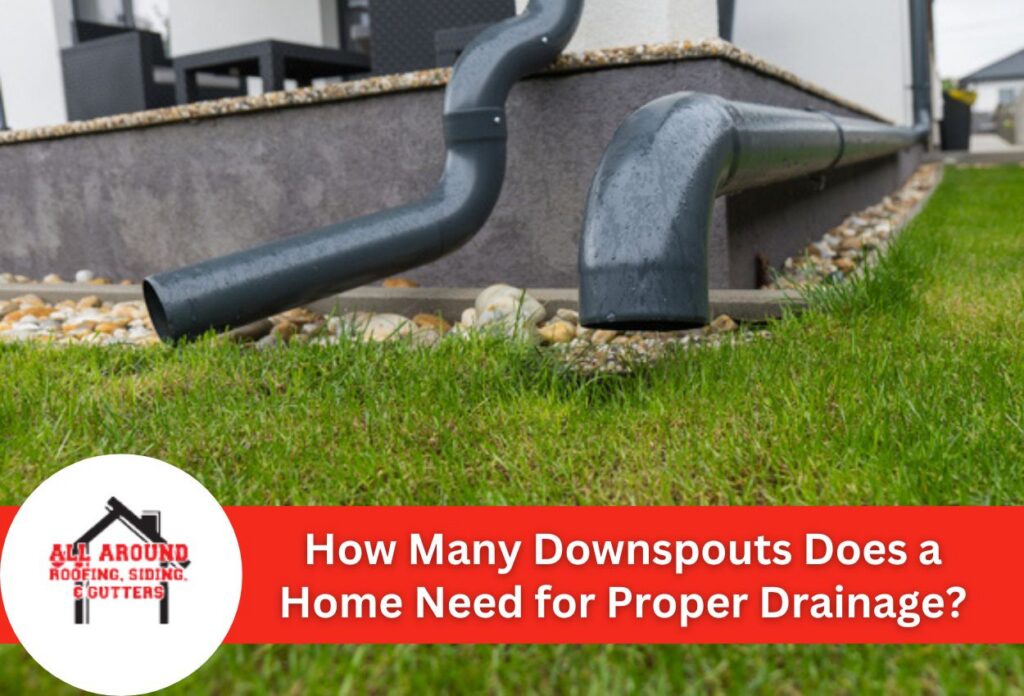
Most homes need one downspout for every 30 to 40 linear feet of gutter, and one downspout for every 600 to 800 square feet of roof drainage area. These two guidelines are practical spacing rules that account for heavy rainfall, roof complexity, and real-world conditions, not the hydraulic ceiling of the gutter channel itself, which is a separate specification. If a gutter run is too long with too few exits, water backs up and spills over the edge right where you don’t want it.
Warning Signs to Act On: Gutters overflowing mid-span, foundation pooling within 3 to 5 feet, or basement moisture within 24 to 48 hours after rain all signal an undersized system. That kind of rainfall puts real pressure on undersized drainage systems, especially on older homes with long gutter runs or complex rooflines.
*Please note, price ranges listed in this article may not reflect the final cost of your project. Prices are subject to change based on various factors such as local labor rates, material quality, and more. All costs established in this article are rough estimates based on average industry rates.
How Many Downspouts Per Linear Feet Does the Industry Recommend?
Most contractors recommend one downspout for every 30 to 40 linear feet of gutter, but high-rainfall areas like Dayton often need downspouts spaced closer to the 30-foot end of that range. The table below shows minimum counts alongside the recommended count when heavy storms are a regular factor.
| Gutter Run Length | Minimum Downspouts Required | Recommended for Dayton, OH |
|---|---|---|
| Up to 30 ft | 1 | 1 |
| 31 to 40 ft | 1 | 2 |
| 41 to 60 ft | 2 | 2 to 3 |
| 61 to 80 ft | 2 | 3 |
Standard 5-inch K-style gutters paired with 3-inch downspouts can handle roughly 5,520 square feet of roof area per downspout under normal conditions. Dayton storms regularly drop 2 or more inches of rain in a single storm, which cuts into that effective capacity fast. Any gutter run exceeding 40 feet needs a downspout at the midpoint, not just at the ends, to keep water moving before it overflows. Downspouts should also be placed at corners and at the lowest point of any sloped gutter run to prevent pooling and backup.
How Many Downspouts Does a 2,000-Square-Foot Home Actually Need?
A 2,000 square foot single-story ranch with about 150 linear feet of gutter needs a minimum of 4 downspouts using the 40-foot rule, or 3 to 4 downspouts using the 600 to 800 square foot roof area rule, and both methods land in the same range for good reason.
- 40-foot spacing rule: Divide 150 linear feet by 40 feet per downspout, and you get 3.75, which rounds up to 4. Spacing them closer to 30 feet apart is recommended in Dayton, where storms can drop 2 or more inches of rain in a single storm.
- Roof area rule: At one downspout per 600 to 800 square feet, a 2,000 square foot roof requires 3 to 4 downspouts. Both rules confirm the same baseline minimum.
- Steep roof pitch above 6:12: A pitch steeper than 6:12 increases effective drainage by about 10% per IPC Table 1106.6, which means the baseline count of 4 may need to go up by at least 1.
- Complex rooflines with dormers or multiple valleys: Each additional roof section adds drainage surface and splits runoff across more paths, requiring downspouts at each low point or valley endpoint.
- Attached garages and enclosed porches: These add square footage to the total drainage area and often need their own dedicated downspout rather than sharing capacity with the main roofline.
- Basement foundations: Concentrated discharge near the foundation raises water intrusion risk, making proper downspout placement and count more important than on slab-built homes.
Many mid-20th-century Dayton colonials, Cape Cods, and two-story wood-frame homes treat 4 to 6 downspouts as a practical minimum because of roofline complexity. Homes of these styles running only 2 to 3 downspouts are frequently undersized, and that gap shows up fast during late-spring thunderstorms.
What Are the Warning Signs That Your Home Doesn’t Have Enough Downspouts?
Four clear signs point to an undersized downspout system: gutters overflowing in the middle of a run (not just at the end caps), water pooling within 3 to 5 feet of the foundation after rain, basement moisture appearing within 24 to 48 hours of a heavy storm, and visible soil erosion channels forming beneath gutter lines. Any one of these symptoms means water is moving faster than the system can handle. Two or more together means the problem is already doing damage.
- Mid-span gutter overflow: Water spilling over the middle of a gutter run, not the end points, points directly to a capacity problem between downspouts, not a clog.
- Foundation pooling within 3 to 5 feet: Standing water this close to the foundation is a drainage failure. In Dayton’s winters, where lows regularly sit in the 20s to 30s°F, that pooled water can freeze and expand against foundation walls, speeding up crack formation.
- Basement moisture within 24 to 48 hours after rain: Water appearing this fast after a storm is a strong signal that discharge is concentrating too close to the house.
- Soil erosion channels under gutter runs: Grooves or bare strips of soil beneath a gutter line show that water has been hitting the same spot repeatedly with too much force.
A properly sized downspout system should clear standing water from gutters within 5 to 10 minutes after rain stops. Water still sitting in gutters 15 to 20 minutes after a storm signals either a capacity shortfall or a slope problem, both of which point to a downspout assessment before winter arrives in Dayton.
What Does It Cost to Add Downspouts, and Is It Worth It?
Adding a single downspout in the Dayton, OH market typically costs $150 to $350, a fraction of what basement water damage or foundation repairs can run. The table below compares common drainage project costs against the repair risk homeowners face when drainage falls short.
| Scale of Work | Typical Cost Range (Dayton, OH) | Foundation/Water Damage Risk if Skipped |
|---|---|---|
| Single downspout addition | $150 to $350 | $500 to $3,000+ (foundation crack repair) |
| Full downspout replacement (average home) | $400 to $900 | $1,000 to $4,000 (basement water remediation) |
| Full gutter and downspout system replacement | $1,500 to $4,000 | $1,000 to $4,000+ (combined remediation and structural repair) |
Material choice also affects how long a downspout system lasts before replacement becomes necessary. Aluminum, the most common choice in the Dayton market, has a functional lifespan of 20 to 30 years with proper maintenance. Galvanized steel averages 15 to 20 years, while copper can last 50 or more years, making it the longest-lasting option for homeowners who want to reduce long-term replacement frequency.
Adding one or two downspouts to an undersized system is typically the highest-ROI drainage improvement available, often costing less than a single basement water remediation service call, which averages $1,000 to $4,000 in the Midwest. For most Dayton homeowners, that math makes a $150 to $350 downspout addition from our gutter services one of the easiest calls in home maintenance.
What Is the Minimum Number of Downspouts for a House Under Ohio Building Expectations?
Ohio’s residential building code does not set a specific number of downspouts a home must have: instead, it sets a performance standard requiring that gutters and downspouts discharge water away from the foundation and that exterior drainage prevent water from accumulating against the structure. The focus is on results, not a fixed count.
In practice, Dayton-area contractors use one downspout per 30 to 40 linear feet of gutter as the working minimum. Local inspectors commonly flag systems where a single gutter run exceeds 50 feet without a downspout, treating that threshold as a functional failure regardless of code language.
Beyond the downspout itself, where the water lands matters just as much as how many exits the system has. Downspout extensions and splash blocks should carry discharge at least 5 to 6 feet from the foundation. Yard grading should slope away from the home at a minimum of 6 inches over the first 10 feet. Both requirements work together, and a properly spaced downspout that dumps water against a flat grade still creates the same foundation pooling risk that the code standard is designed to prevent.
Homeowners who notice storm-related damage to their roofline alongside drainage problems may also want to review our residential roof storm damage services to address both issues at once.
Ready to Find Out If Your Dayton Home Has Enough Downspouts?
Adding a single downspout costs $150 to $350, far less than the $1,000 to $4,000 a basement water remediation call can run. Spring and early fall are the best times to schedule a drainage check, before peak storm season or winter temperature changes arrive and put an undersized system to the test.
All Around Roofing, Siding & Gutters works with Dayton homeowners to count, assess, and correct downspout systems before small gaps turn into expensive repairs. Catching a short by one or two downspouts early is one of the easiest wins in home maintenance. Our team also provides a residential roof inspection to evaluate the full picture of your home’s drainage and roofing health at the same time.
Schedule your free gutter inspection.
Not ready to schedule? Learn more about downspout assessment and gutter services.
Frequently Asked Questions
Got questions about your roof? We’ve got answers. From maintenance tips to insurance claims and repair timelines, our FAQ section covers the most common concerns homeowners have. Get informed and make confident decisions about protecting your home.
People Also Ask
Can I add a downspout anywhere along an existing gutter run, or does placement have to match the original installation?
Downspouts can be added at most points along an existing gutter run as long as the gutter has adequate slope directing water toward the new outlet. Dayton’s older aluminum systems often allow mid-span additions without full reinstallation, though the fascia board and downspout routing path should be clear of obstructions before committing to a location.
Do gutter guards or leaf covers affect how many downspouts a home needs?
Gutter guards reduce debris buildup but do not increase drainage capacity, so they don’t change the recommended downspout count. In heavy rainfall common to Dayton, a guarded system with too few downspouts will still overflow: guards address clogging, not volume limitations.
Does the direction a home faces affect which sides of the house need more downspout capacity?
Roof orientation affects how much sun and wind-driven rain each side receives, but the drainage is determined by roof area and slope rather than compass direction. However, north-facing gutter runs in Dayton tend to stay wet longer due to less sun exposure, making proper downspout placement on those sides especially important for preventing freeze-related damage.
Related Articles
-
 May 3, 2024How Many Soffit Vents Do You Need?Adequate attic ventilation is necessary to maintain a healthy and functional living area, but it is often overlooked. As soffit vents circulate air and prevent issues like heat and moisture buildup, they are crucial to attic ventilation systems. Learn the answer to the question, “How many soffit vents do you need for your home?” and … <p class="link-more"><a href="https://roofingkettering.com/blogs/how-many-soffit-vents-do-you-need/" class="more-link">Continue reading<span class="screen-reader-text"> "How Many Soffit Vents Do You Need?"</span></a></p>
 -
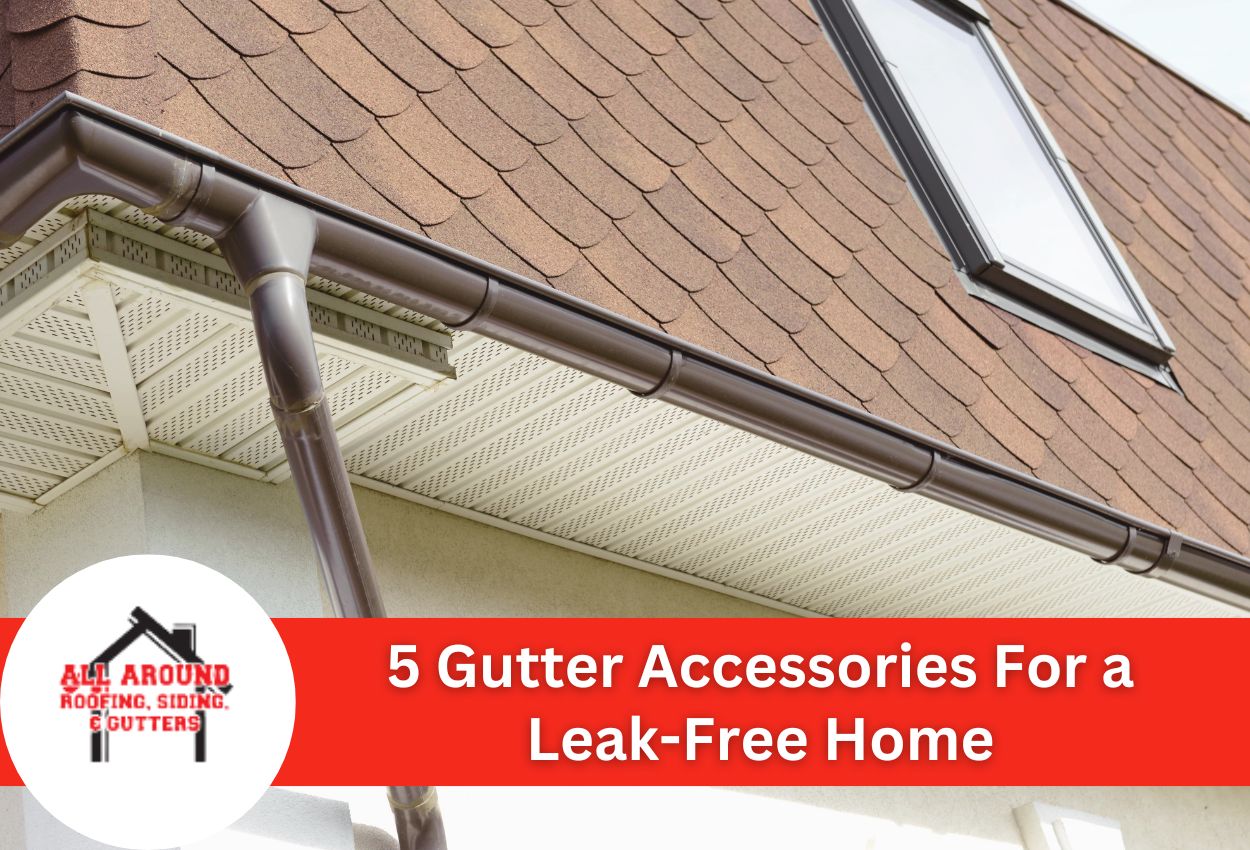 March 5, 20245 Gutter Accessories For a Leak-Free HomeAs homeowners, we understand just how important it is to keep our properties in excellent shape. The gutter system is an important, but sometimes disregarded, part of any home. Rainwater must be directed away from your home’s foundation by properly operating gutters in order to avoid water damage, leaks, and expensive repairs. There are more … <p class="link-more"><a href="https://roofingkettering.com/blogs/rain-gutter-accessories/" class="more-link">Continue reading<span class="screen-reader-text"> "5 Gutter Accessories For a Leak-Free Home"</span></a></p>
 -
 June 1, 2023How Many Layers Of Roof Shingles Are Allowed In Ohio?Are you considering adding layers of shingles to your existing roof in Ohio? Before you proceed, you need to know how many layers of roof shingles are allowed on Ohio homes, and what the limitations are. Many homeowners in Ohio choose re-roofing before considering the weather impacts on roofs and the consequences of adding more … <p class="link-more"><a href="https://roofingkettering.com/blogs/layers-of-roof-shingles/" class="more-link">Continue reading<span class="screen-reader-text"> "How Many Layers Of Roof Shingles Are Allowed In Ohio?"</span></a></p>
Protect Your Home with Expert Roofing
Don’t wait for leaks or storm damage to cause costly repairs. Our experienced roofing team provides fast, reliable service, high-quality materials, and lasting results. Ensure your home stays safe, secure, and looking great—contact us today for a free estimate.